

October 30, 2026
Understanding DUI Per Se in Idaho: A Complete Guid...
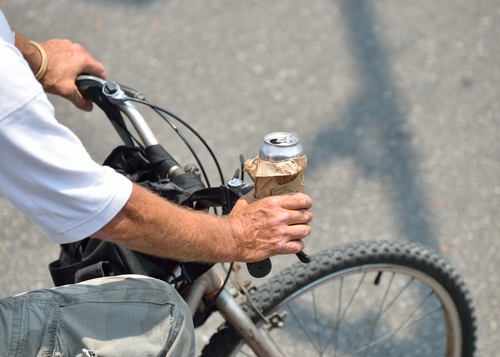
Generally, no, if you are riding a traditional bicycle powered solely by human effort. Idaho’s DUI law prohibits driving or being in actual physical control of a “motor vehicle” while under the influence or with a prohibited alcohol concentration. Idaho law expressly excludes vehicles moved solely by human power from the definition of a motor vehicle.
That does not mean impaired bicycling is consequence-free. Cyclists must still follow applicable traffic rules and exercise due care. A citation, crash, injury claim, or separate criminal allegation may arise from the particular conduct involved.
At Martens Law Office, Jared Martens helps clients in Boise and throughout the Treasure Valley evaluate the exact allegation, the device involved, and the defenses available. Call (208) 344-0994 for a free consultation.
Idaho Code § 18-8004 applies to a person who drives or is in actual physical control of a motor vehicle while impaired. Under Idaho Code § 49-123, a motor vehicle is generally a self-propelled vehicle meeting the statutory standard, but the definition expressly excludes vehicles moved solely by human power. A conventional pedal bicycle therefore is not a motor vehicle for purposes of Idaho’s standard DUI statute.
| Feature | Riding a Traditional Bicycle | Driving a Motor Vehicle |
| Covered by Idaho’s DUI statute (§ 18-8004)? | No | Yes |
| Meets definition of “motor vehicle” (§ 49-123)? | No | Yes |
| Subject to traffic law duties (§ 49-714)? | Yes | Yes |
| Potential for other charges while intoxicated? | Yes, depending on conduct | Yes |
| License consequences from a standard DUI? | No | Yes |
While a traditional bicycle doesn’t trigger Idaho’s standard DUI statute, riding while intoxicated can still create serious practical and legal problems. A cyclist must follow applicable traffic rules and exercise due care. Depending on what happens, law enforcement may issue a citation for a traffic violation, and a crash may lead to injury claims, property-damage claims, or separate criminal allegations based on the specific conduct involved. Idaho Code § 49-714 gives cyclists the applicable rights and duties of other vehicle drivers under specified traffic chapters and separately requires due care.
A cyclist does not lose the duty to ride safely simply because the standard DUI statute does not apply. Idaho Code § 49-714 gives people riding bicycles and other human-powered vehicles the applicable rights and duties of other vehicle drivers under specified traffic law chapters, except where bicycle-specific rules or the nature of the rule make an exception necessary. It also requires cyclists to exercise due care.
Depending on the circumstances, an officer may issue a citation for conduct such as:
If a cyclist causes a collision, the incident may also involve injury claims, property damage claims, or separate allegations based on the facts.
If the bicycle is a traditional, human-powered bicycle, Idaho’s standard DUI statute generally does not apply. Officers may still investigate the situation and may issue citations or pursue other allegations if the facts support a separate violation.
Additionally, if your intoxicated riding leads to an accident causing injury or property damage, you could face other forms of civil or criminal liability connected to that specific incident, separate from any DUI specific charge.
The presence of a motor does not automatically make a device a “motor vehicle” for Idaho DUI purposes. Idaho law expressly excludes a qualifying electric-assisted bicycle from the definition of motor vehicle. A qualifying e-bike must have fully operable pedals, an electric motor under 750 watts, and meet Idaho’s Class 1, Class 2, or Class 3 criteria.
Other devices may be classified differently. A moped, motorcycle, motorized bicycle, electric scooter, modified e-bike, or other powered device may be subject to different statutory rules depending on its design and legal classification. The facts matter, including the device’s pedals, wattage, speed capability, method of propulsion, and whether it falls within Idaho’s definition of an electric-assisted bicycle.
If you were cited or arrested after operating a bicycle, e-bike, moped, or other device, speak with Martens Law Office promptly. Call (208) 344-0994 to discuss the specific charge and your options.
Whether you’re facing a citation connected to bicycle riding, a standard DUI, or uncertainty about how the law applies to an e-bike or similar device, understanding exactly what charge you’re facing, and what defenses may apply, is essential to protecting your rights.
Attorney Martens takes an aggressive approach to criminal law, seeking to obtain the best outcome possible in every case. In some situations, that means resolving a matter economically and with the least stress by negotiating with the district attorney or arranging to have charges dismissed altogether. In others, it means being fully prepared to take a case to trial to make sure you’re treated fairly.
Our alcohol-related crime attorneys can review the specific facts of your situation, whether that involves a standard DUI or a related citation connected to bicycle or motorized device operation. If you’ve been arrested on criminal charges, arrange to speak with a lawyer as soon as possible.
Contact Martens Law Office at (208) 344-0994 today for a free consultation with one of our DUI attorneys.
Generally, a standard DUI based license suspension should not apply if the incident involved only a traditional, human-powered bicycle, because Idaho’s DUI law applies to motor vehicles. A different outcome may be possible if another motorized device or a separate offense is involved.
Cyclists must follow applicable traffic laws and exercise due care. Depending on the circumstances, an officer may issue a citation for failing to yield, violating applicable bicycle stop-sign or traffic-signal rules, riding without required nighttime equipment, or another traffic violation.
No, not simply because it has an electric motor. Idaho law expressly excludes a qualifying electric-assisted bicycle from the definition of “motor vehicle.” Other powered devices, including certain mopeds, motorized bicycles, motorcycles, electric scooters, and modified e-bikes, may be treated differently depending on their legal classification.